The question
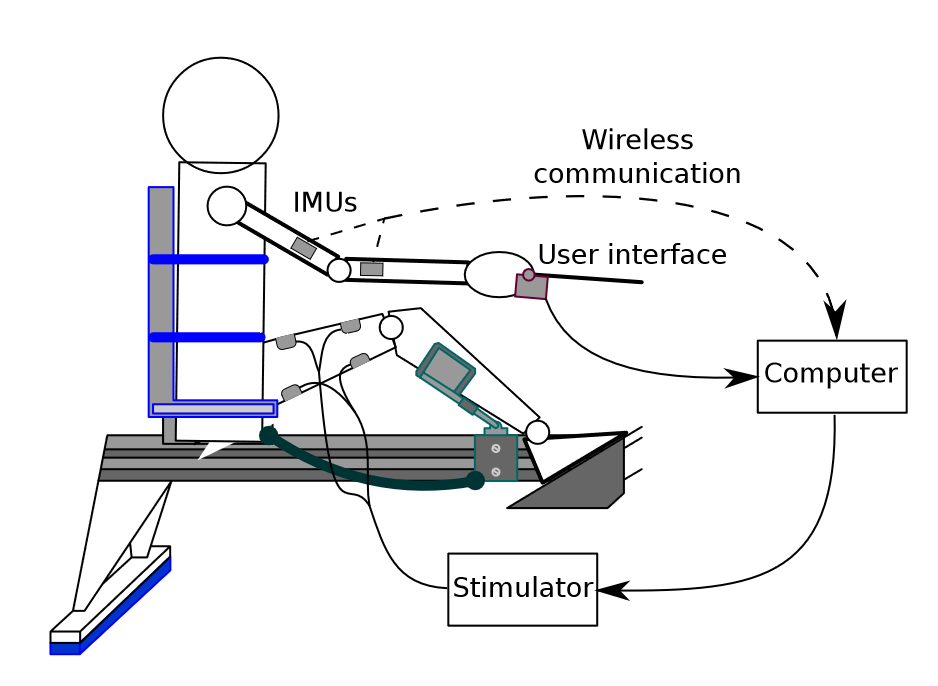
How can electrical stimulation respond to a person’s movement and help coordinate a functional activity? My earlier work investigates this question in cycling, sitting-pivot transfers, indoor rowing and grasp assistance after spinal cord injury.
The approach
The work combines wearable measurement, control engineering and experimental evaluation. In rowing, for example, upper-limb kinematics provide information for coordinating electrically assisted movement. Cycling work considers control of cadence and responses to disturbances.
A connected programme of work
The activities differ, but the design problem is shared: measure the relevant movement, understand the task and coordinate assistance accordingly. This work provides a foundation for my broader interest in responsive, personalised assistive systems.
Evidence and scope
The programme includes peer-reviewed research and prototype evaluations. The scope and participant samples differ across studies; the papers should be consulted for their specific findings and limitations.
These resources describe research, not instructions for using electrical stimulation without appropriate professional oversight.
Related publications: FES cycling and preparation for Cybathlon (2017), FES-assisted transfer (2018), assisted grasping (2019).